
The short answer
PDRN (polydeoxyribonucleotide) is a purified complex of DNA fragments from salmon trout, which professionals use in skin treatments to support the skin’s own repair processes. Clinicians have used PDRN in wound healing for over 30 years. In aesthetics, practitioners use it to improve how skin tone, texture, hydration and redness look.
The press often calls PDRN the “salmon sperm facial”. However, that nickname misleads people. No salmon sperm ever touches the skin, because the salmon trout DNA simply serves as the source material for a sterilised, standardised nucleotide complex.
PDRN also differs from polynucleotides, although people often confuse the two. PDRN has shorter DNA chains and a lower molecular weight, so it suits hydration, pigmentation and texture. Polynucleotides have longer chains, and therefore suit deeper tissue repair.
On this page
- What is PDRN?
- Why do people call PDRN the salmon sperm facial?
- PDRN vs polynucleotides: what is the difference?
- Where does PDRN sit in regenerative aesthetics?
- What is PDRN+B3?
- What does PDRN treat?
- How do clinics deliver PDRN?
- How many PDRN treatments do you need?
- Who should avoid PDRN treatment?
- PDRN aftercare
- How UK clinics can order PDRN+B3
- Frequently asked questions
What is PDRN?
PDRN stands for polydeoxyribonucleotide. PDRN is a mixture of DNA fragments, with molecular weights between roughly 50 and 1500 kDa, which comes from the sperm cells of salmon trout.
Manufacturers choose salmon trout for a specific reason. Its nucleotide fragments closely resemble human DNA, so the skin accepts PDRN readily and tolerates it well.
From fish to vial
First, manufacturers purify and sterilise the raw material. Then they standardise it. As a result, a professional vial contains a consistent fraction of nucleotide chains and nothing else.
Nucleotides are the building blocks of DNA. Because of that, PDRN first attracted clinical attention in medicine rather than beauty. In fact, clinicians have used it in wound healing for more than 30 years, long before it reached any aesthetics price list.
In one line: PDRN is a purified salmon trout DNA complex that supports skin repair, and it carries a 30 year history in wound healing.
Why do people call PDRN the salmon sperm facial?
The press calls PDRN the “salmon sperm facial” because journalists needed a headline, and “polydeoxyribonucleotide treatment” is not one.
Still, the nickname deserves correcting, because it puts people off a treatment they would otherwise happily consider.
To be clear: PDRN treatment does not involve putting salmon sperm on your face. Instead, salmon trout DNA acts as the raw material for a purified, sterilised complex.
Here is a useful comparison. Bacterial fermentation produces the hyaluronic acid in most skincare, yet nobody calls it a bacteria facial.
What this means for clinics
Expect this question at consultation. In our experience, the direct and unembarrassed answer lands far better than dodging the phrase. Furthermore, it opens a genuinely useful conversation about what regenerative treatments actually do.
PDRN vs polynucleotides: what is the difference?
Both PDRN and polynucleotides come from DNA, but PDRN has shorter chains and a lower molecular weight. That single difference then drives everything else about how practitioners use each one.
Practitioners ask us this more than any other question. Frequently, people use the two terms as though they mean the same thing. In reality, they do not.
| Polynucleotides (PNs) | PDRN | |
|---|---|---|
| Structure | Longer chains, higher molecular weight | Shorter chains, lower molecular weight |
| Strength of effect | Deeper, more potent | Less concentrated |
| How it works | Remodels the extracellular matrix, the skin’s support scaffold | Activates adenosine receptors to prompt regeneration |
| Best for | Deep tissue repair, significant signs of ageing | Hydration, pigmentation, skin texture |
| How clinics use it | Injectable skin boosters | Topically or by injection |
What this means in practice
PDRN and polynucleotides do not compete. Rather, they sit at different points on the same spectrum.
Polynucleotides offer the heavier structural option. PDRN, meanwhile, offers the more versatile one.
Because PDRN has a lower molecular weight, practitioners can use it topically with a device as well as by injection. Consequently, it opens up to a far wider range of practitioners and scopes of practice.
Where does PDRN sit in regenerative aesthetics?
Regenerative aesthetics covers treatments that prompt the skin’s own repair processes, instead of adding volume or removing tissue.
Under that umbrella sit polynucleotides, biostimulators, exosomes, growth factors, peptides and PDRN.
Meanwhile, patient demand has genuinely shifted. The conversation has moved away from filling and freezing, and towards skin quality, skin health and skin longevity.
PDRN fits that brief neatly. As a result, it has moved from a niche trade ingredient to a term that consumers actively search for.
What is PDRN+B3?
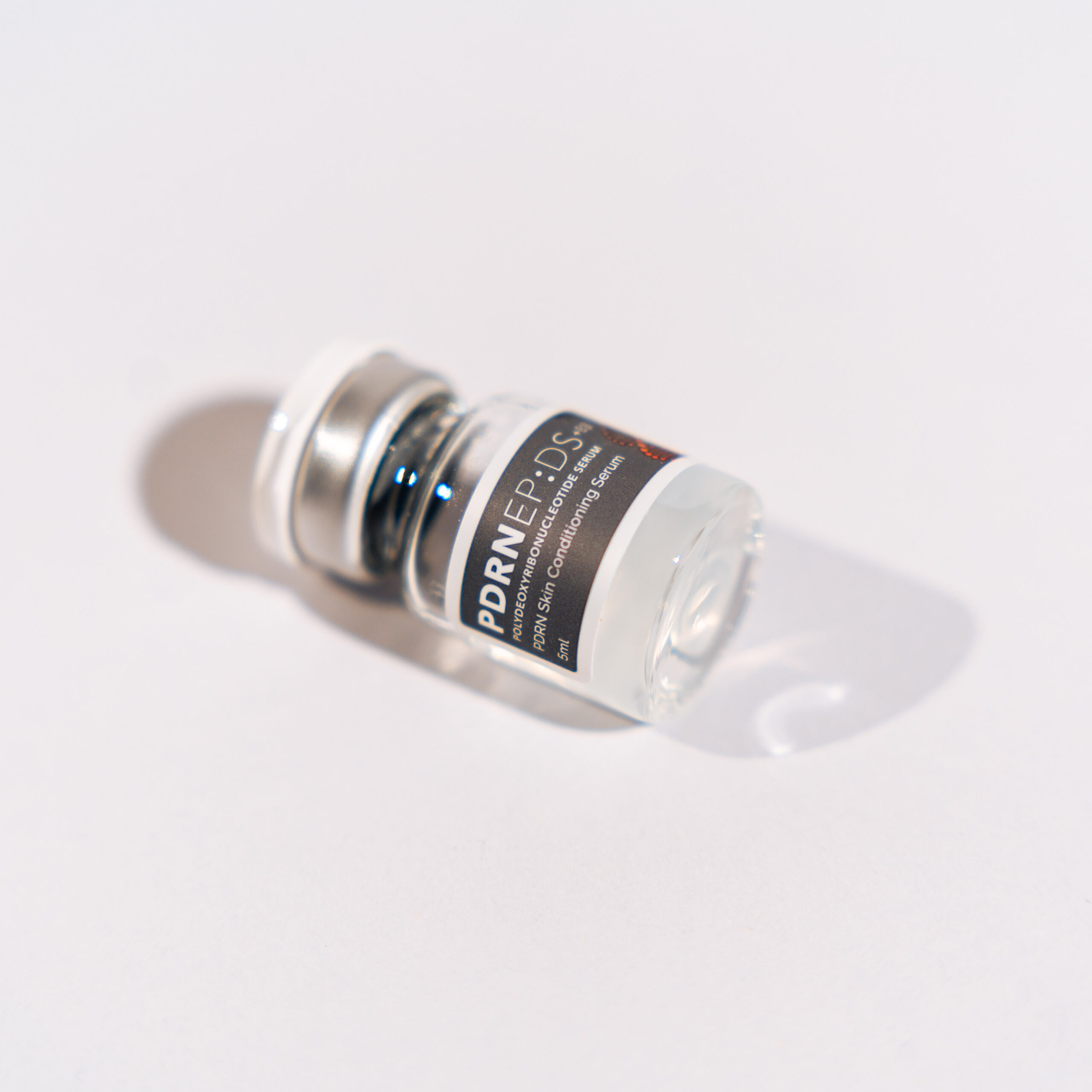
PDRN+B3 is a professional skin conditioning serum that combines two actives rather than one: 2% PDRN at 20mg/ml and 2% niacinamide (vitamin B3), in a glycerin base.
We paired them deliberately. PDRN and niacinamide tackle overlapping concerns, but they approach them from different directions.
Together, the formula targets three things: cellular repair, a stronger skin barrier, and calmer inflammation.
Why niacinamide
Dermatology research backs niacinamide more thoroughly than almost any other skincare ingredient. That is precisely why we chose it, rather than something newer and louder.
Published research describes four relevant actions:
- Barrier function. It boosts ceramide and fatty acid production in the stratum corneum, the skin’s outer layer.
- Cell energy. It raises NAD+ levels, which supports DNA repair.
- Inflammation. It blocks PARP-1 and calms the NF-kB pathway.
- Even tone. It slows pigment transfer between skin cells.
Relevant literature includes Draelos ZD, Dermatol Surg. 2006, on elasticity, pigmentation and texture, and also Hakozaki T et al., Br J Dermatol. 2002, on hyperpigmentation and inflammation.
Why glycerin instead of hyaluronic acid
This choice surprises people, because almost every serum on the market leads with hyaluronic acid.
We chose glycerin for five reasons:
- It hydrates without pulling water from deeper skin. Hyaluronic acid can do exactly that in dry conditions.
- It performs reliably in any climate.
- It supports barrier repair alongside regeneration, instead of working against it.
- It delivers long term results, not short term plumping.
- Decades of clinical evidence back it.
Hyaluronic acid hydrates temporarily, but it does not support the barrier. Therefore, in a product built around barrier function, glycerin is the more coherent choice.
What does PDRN treat?
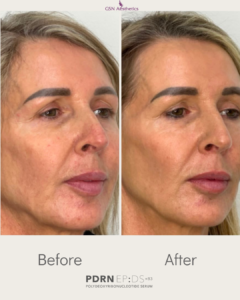
Practitioners use PDRN+B3 for post-inflammatory hyperpigmentation, early signs of ageing, sun damaged skin, rosacea, acne, and dehydrated or damaged skin barriers.
Patients and practitioners typically describe treated skin as:
- Brighter, with more even tone
- Better hydrated
- Less visibly red
- Smoother, with less flakiness
In addition, practitioners commonly report faster recovery after other procedures, plus visible radiance.
Who it suits
PDRN suits the patient who wants better looking skin, but who does not want added volume or altered features. Notably, that includes a growing group who have specifically ruled out injectable filler.
Credit: GSN Aesthetics
How do clinics deliver PDRN?
Only qualified professionals can use PDRN+B3. It works best with the WOW fusion® device, but it also suits microneedling pens, RF needling, mesotherapy, and post-peel or post-laser protocols.
The full compatibility list covers:
- WOW fusion® device at 0.6mm or 1.00mm
- Microneedling pens and RF needling
- Mesotherapy guns, nappage, stamps and rollers
- Post-peel and post-laser protocols, including CO2 and Nd:YAG
Protocol 1: WOW fusion® device
Use this for skin regeneration, revitalisation, texture improvement and periocular (around the eye) rejuvenation.
First, mix 1ml PDRN+B3 with 2ml of a WOW fusion® solution. Then choose the solution to match the patient’s concern:
- R-Vit for micro-nutrition and general skin health
- AGE Complex for wrinkles, fine lines, loss of elasticity and sun damage
- Bright Complex for pigmentation, melasma and UV damage
Protocol 2: Microneedling pen
Use this for overall rejuvenation, texture, tone and fine lines. Apply PDRN+B3 directly to the skin, then use it as the glide medium.
You can treat the face (including around the eyes), neck, décolletage and hands.
Protocol 3: Mesotherapy (intradermal microinjection)
Use this for targeted regenerative treatment. Place intradermal papules 0.5cm apart, at 0.02ml per papule, using a 4mm 30G or 32G needle.
You can treat the face (including around the eyes), forehead, neck, chest and décolletage, and hands.
However, the area around the eyes needs its own technique considerations, which training covers specifically. Therefore, always work to the current treatment protocol document for that region, rather than adapting a general facial technique.
A practical handling note
PDRN behaves as a non-Newtonian fluid, which simply means it changes thickness as you move it. At rest it sits thick and viscous. Under movement, though, it thins.
The long DNA chains coil and tangle when static, so they resist flow. Under shear, however, they line up, which reduces that resistance.
At the treatment couch, that means three things:
- Always warm the vial to body temperature in a bowl of warm water
- Always shake it vigorously before use
- Draw up with an 18G needle
Skip the first two steps and you will fight the viscosity for the entire treatment.
How many PDRN treatments do you need?
Most patients have 3 treatments with the WOW fusion® device two weeks apart, or 3 to 6 injection treatments three to four weeks apart.
| Delivery method | Course | Interval |
|---|---|---|
| WOW fusion® | 3 treatments | 2 weeks apart |
| Microneedling pen | Follow device manufacturer guidance | Per manufacturer |
| Intradermal injection | 3 to 6 treatments | 3 to 4 weeks apart |
Your practitioner will confirm the right course at consultation, because skin condition and tolerance both affect the plan.
Who should avoid PDRN treatment?
PDRN does not suit anyone who is pregnant or breastfeeding, anyone under 18, or anyone with an ingredient allergy, active skin cancer or an active cold sore.
Contraindications
Do not treat patients who:
- Are pregnant or breastfeeding
- Have an allergy to any ingredient
- Have active skin cancer
- Have active herpes simplex
- Have taken oral isotretinoin within the last 6 months
- Have used topical retinol within 5 days
- Are under 18
Cautions
Proceed carefully where patients have skin diseases, a high risk of post-inflammatory hyperpigmentation, or keloid scarring. Similarly, take care with anticoagulants, haemophilia and clotting disorders, MS, lupus, motor neurone disease, other neuromuscular disorders, uncontrolled diabetes, and herpes simplex.
Practitioner responsibilities
You must keep technique selection within your scope of practice and training. You may adjust treatment parameters to suit skin condition and tolerance. Finally, you must record every adverse event in the patient notes.
PDRN aftercare
PDRN aftercare centres on strict sun protection, because the results rely on a repair process that unprotected UV exposure actively undermines.
Advise patients to:
- Use soothing post-procedure products as indicated
- Apply Intradermology® NX-Gen Synergy 6 SPF 50 strictly (internal link)
- Avoid heat, saunas, steam rooms and hard exercise for 48 hours, or as your clinic policy states
- Avoid make-up for at least 12 hours
Above all, reinforce aftercare at every appointment. Compliance matters more here than with many other treatments.
Storage
Store PDRN+B3 in a cool, dry place before opening. After opening, refrigerate it and use it within one month. Also keep it away from direct light and out of reach of children.
How UK clinics can order PDRN+B3
We supply PDRN+B3 to qualified aesthetic professionals only.
To order, or to ask about training and protocols, email info@wowfacial.co.uk
Include your clinic name, your qualification and the devices you already use. Then we will come back to you with pricing, availability and the treatment protocol document.
Frequently asked questions
Questions patients ask
Is PDRN the same as the salmon sperm facial? Yes, “salmon sperm facial” is simply the media nickname for PDRN treatments. PDRN comes from salmon trout DNA, which manufacturers purify and sterilise into a standardised nucleotide complex. However, no salmon sperm ever touches your skin.
Is PDRN a filler? No. PDRN adds no volume and does not change facial structure. Instead, PDRN improves skin quality.
Does PDRN treatment hurt? Comfort depends on which delivery method your practitioner uses. Therefore, they will explain what to expect, and discuss numbing options, at your consultation.
How many PDRN treatments will I need? Most patients have 3 treatments two weeks apart with the WOW fusion® device. Injection courses usually run to 3 to 6 treatments, three to four weeks apart. Your practitioner will advise at consultation.
Can PDRN treat the area around my eyes? Yes, practitioners can treat the area around the eyes. However, the technique depends on your practitioner’s training and their assessment at consultation, because this area needs a different approach to the rest of the face.
Can PDRN treat my neck, chest and hands? Yes. Practitioners can treat the neck, décolletage and hands as well as the face.
Should I avoid PDRN treatment? Avoid PDRN if you are pregnant or breastfeeding, under 18, allergic to the ingredients, or if you have active skin cancer or an active cold sore. Also avoid it if you have taken oral isotretinoin in the last 6 months, or used topical retinol in the last 5 days. Your practitioner will check your full medical history first.
Can I buy PDRN for home use? No. Only qualified practitioners can buy PDRN+B3, because it needs a device or an injection technique to work properly.
Questions clinics ask
Is PDRN better than polynucleotides? Neither one is better. Polynucleotides have longer chains and a higher molecular weight, so they suit deep tissue repair and more significant signs of ageing. PDRN has shorter chains and a lower molecular weight, so it suits hydration, pigmentation and texture. Furthermore, practitioners can use PDRN topically as well as by injection.
Which devices work with PDRN+B3? PDRN+B3 works best with the WOW fusion® device. In addition, it suits microneedling pens, RF needling, mesotherapy guns, nappage, stamps and rollers, plus post-peel and post-laser protocols.
Where can clinics buy PDRN in the UK? Email info@wowfacial.co.uk with your clinic and qualification details.
Key takeaways
- PDRN is a purified salmon trout DNA complex, not salmon sperm, and clinicians have used it in wound healing for over 30 years.
- PDRN and polynucleotides differ. Chain length and molecular weight decide which one suits a patient.
- PDRN+B3 combines 2% PDRN with 2% niacinamide in a glycerin base, so it targets repair, barrier and inflammation together.
- PDRN is versatile. It works with the WOW fusion® device, microneedling pens, RF and mesotherapy.
- Clinics can order by emailing info@wowfacial.co.uk.